9 Best Warehouse Simulation Software in 2025
Best Warehouse Simulation Software: Just think of the possibility of workflow optimization in a warehouse without ever moving a single pallet. In 2025, the warehouse simulation software will no longer be a luxury; it will be a necessity.
You are operating in a field where e-commerce requests sky-rocket, labor shortages make staffing a challenge, and the need for quick adaptability is your everyday reality. Those days when you can rely on either intuition or past experiences only are already gone.
For businesses managing financial processes efficiently, the Best 1099 Software for Small Businesses might be a valuable resource to explore alongside warehouse optimization tools.
Today, the success of your work is entirely based on data-driven insights and predictive capabilities. The current warehouse is a complicated environment.
You manage countless variables, e.g. stock flow or resource distribution, and not to mention the seamless inclusion of automation and robotics.
If asset tracking and property management are critical to your operations, consider reviewing the Best Asset Management Software for Multi-Family to complement your simulation tools.
As they continue to expand, you need equipment that will allow you to experiment with strategies, look ahead, and fine tune operations prior to implementation.
This is the point where warehouse simulation software comes into play. This is a simulation-based environment for you to model, analyze, and refine your processes.
This guide provides you with the top 9 best warehouse simulation software in 2025. You’ll also be shown how these tools help you reduce operational risks and increase efficiency and productivity, ensuring that you are always one step ahead of your competitors.
By using the technology of warehouse simulation software, you can move from running a reactive operation to one that is proactive even if you drop the ball on your part; this way, it will be prepared for the future.
These tools will show you how to create a digital twin warehouse. Logistics simulations will enable you to foretell the future even before it happens.
By the way, if you use supply chain simulation you can easily see the whole picture of the issue by dragging only one variable. The concepts of warehouse optimization and how these tools can help you with them will have been disclosed to you.
This proactive action will not only save your resources but also increase your operational efficiency in general. The complexity of logistics in 2025 will become apparent to you as you realize that warehouse simulation software is the best weapon that you have when it comes to excelling in your logistics operations.
Best Warehouse Simulation Software in 2025:
- FlexSim
- AnyLogic
- Simio
- Arena Simulation Software
- Witness Horizon
- Tecnomatix Plant Simulation
- ProModel
- Supply Chain Guru
- Delmia Quintiq
Understanding the Need for Warehouse Simulation Software
Why should you invest in simulation? This question probably hovers over the future of your company while you are pondering over it. You meet countless challenges and simulation gives you a way of preventing them in a proactive way.
The first and foremost reason to resort to warehouse simulation is to decrease operational risks and associated costs. Through the creation of a virtual model of the warehouse, you can see and tweak all the changes and improvements without any interruptions in your live operations.
This is a really game-changing method as it permits you to find bottlenecks, arrange layouts more efficiently, and examine new technologies all before investing heavily in them.
Benefits of Simulation
Increased efficiency and faster movements and throughput are two of the most significant benefits. You will know inside out all the details of your inventory flow, resources utilization, and workflow patterns so that there is nowhere to find for improvement.
Simulation might be a powerful tool to identify possible bottlenecks before they happen and draw up a plan for smooth and efficient operation.
Through the use of detailed scenario planning and elaborating on the question of “what if” you can examine the effectiveness of different changes ranging from minor to revolutionary ones.
It is very valuable in that it allows you to make quick changes in response to market conditions alter. The automation and robotics integration assessment will more than likely be easier with simulation in your fingertips.
You will be able to model the influence triggered by the implementation of AGVs, AMRs, and robotic systems for picking, which guarantees their optimum integration into your established procedures.
This is just one of the many benefits that will accrue from reducing the probability of errors and skyrocketing the benefits provided by these devices. Moreover, a simulation environment is a great training and onboarding platform for staff.
You can provide your employees with real-life scenarios in which they can practice and become familiar with new procedures and technologies without the danger of damaging equipment or causing downtime.
Among many things a layout that is optimized through data-driven insights is a plus too. You can then analyze the information to determine the most efficient layout of your warehouse. This will cut down on time spent running around and improve the overall work.
It works at the level of inventory management and flow as well. There are multiple possibilities for you to simulate different stock items’ strategies to know the right stock levels, save on storage units, and receive deliveries on time.
Moreover, improved resource utilization enables you to get the most out of your available resources, such as labor, tools, and space. To sum it up, warehouse simulation will enable you to be in the driving seat with the facts and analyze the data without relying on hunches.
This active measure not only saves your resources but also enhances your overall operational performance. Through the use of warehouse simulation software, you can convert your warehouse from a reactive operation to a proactive operation, paving the way for you to be ready to face whatever comes in 2025 and beyond.
You can easily see how warehouse efficiency gets boosted, and how risk mitigation becomes much easier now.
Warehouse Simulation Software Core Features to Look for in 2025
As you look towards 2025, you will recognize that warehouse simulation software has evolved significantly. These tools, to get the most out of them, you as a user need to know how the core features will help in automation and product advancement.
Advanced Visualization and 3D Modeling
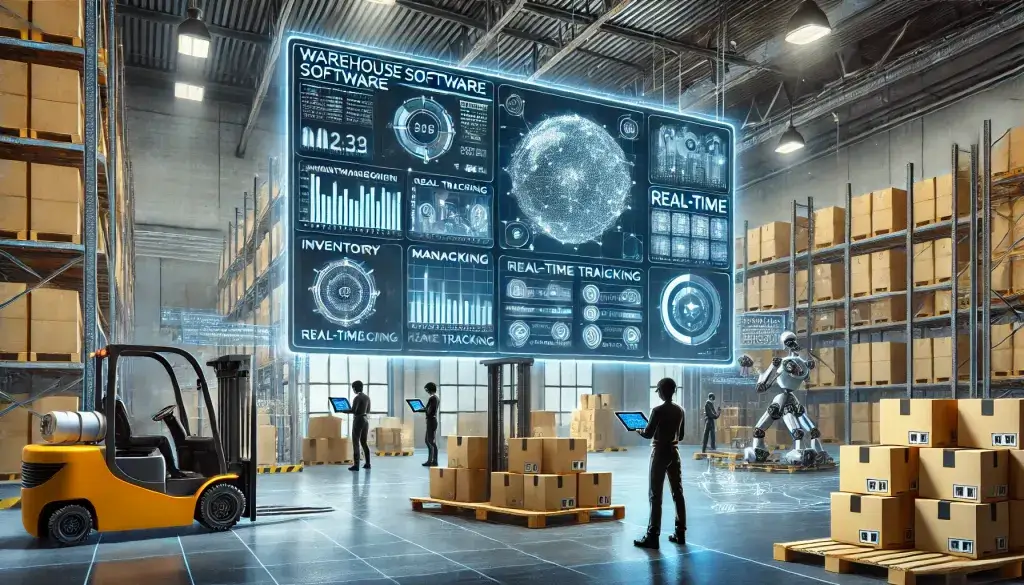
First, you’ll need advanced visualization and 3D modeling. Picture for a moment that your warehouse is like a real-world computer game where you can design the setting exactly as you would a real physical place.
Using this method, you will be able to walk through your imaginary facility and determine how the processes flow, and eventually tackle some potential issues if any arise in reality.
Visuals of data boards that are interactive offer you a glimpse into your operating performance, which you can do in real time and that will allow you to make smart decisions. Moreover, merging AR and VR will transform the way you perceive simulation data.
You might employ AR to display superimposed simulation info on your physical warehouse in real-time, dole out instructions to your workers or let workers view the content. You can also participate in the real-time simulation by using VR.
Data Integration and Analytics
Next, consider data integration and analytics. It is a must to have a real-time data feed from your Warehouse Management System (WMS), Enterprise Resource Planning (ERP), and Internet of Things (IoT) devices.
These feeds verify that the simulations you use are currently in line with real-world operational practices. Through machine learning techniques, you can utilize AI to predict demand, identify production weaknesses, and efficiently allocate production resources to where they are most needed.
Along with adjustable reporting and a set of dynamic dashboards that display your metrics very clearly and enable you to make the right type of reports to fit your needs.
Automation and Robotics Simulation
Automation and robotics simulations will also be necessary. You should perform AGV/AMR path planning and optimization simulations to ensure the movement of goods is smooth and efficient.
By using the robotic picking and packing simulation, you can compare different automation strategies and get the robot to work to test its impact on throughput.
Automated storage and retrieval system (AS/RS) modeling supports achievable goals such as space saving and decreased handling times.
Cloud-Based Accessibility and Scalability
Cloud-based accessibility and scalability are also area that cannot be overlooked. Remote access and collaboration features will allow the entire team and stakeholders to work from various points.
A scalable system is a must in order to be able to develop the simulation models to the same capacity as the expansion of your Webservice operation.
Software-as-a-Service (SaaS) gives you the flexibility to access cutting-edge simulation technologies in a cost-effective way.
AI and Machine Learning Integration
Finally, AI and machine learning integration will be what truly sets the innovation in motion. Automating the system will allow you to adjust the resources as per the changing condition.
Through providing accurate predictions, automated bottleneck detection can be used to implement resolution measures before the operation gets interrupted.
Predictive simulation of maintenance helps you to expect equipment breakdowns and plan maintenance accordingly.
It is these main features that will enable you to make your warehouse operate better and save costs and time, which will bring about great efficiency.
In your search for warehouse simulation software, be particular about solutions that give you the option of engaging in these advanced capabilities.
The digital twin, 3D warehouse modeling, predictive analytics, AGV simulation, cloud warehouse simulation, and SaaS logistics are the products to be looked into more deeply.
Top 9 Best Warehouse Simulation Software in 2025
Warehouse simulation software options have increased to such an extent that you can choose from a wide range of solutions by 2025. The focus of this article is now on 9 such options all of which deliver benefits and advantages, the qualities of which might make them the stand out from other software available in the market:
1. FlexSim
FlexSim is an industry-leading warehouse simulation software that has become well-known for the strong 3D modeling functionality it provides, which in turn allows for the seamless simulation of discrete events and material management, facility layout, and resource allocation optimization.
It delivers life-like digital twin creation where the interactive visualizations depict warehouse dynamics very accurately. The tool also allows for analytics in real-time, scenario testing, and an interface that is user-friendly to decision-makers in order to improve operational efficiency.
FlexSim has been designed with adaptability and comprehensive simulations in mind, and it is known as a tool that helps organizations cut costs, increase productivity, and smooth the processes of various distribution environments thanks to its reliability in real-world testing.
Key Features:
- 3D simulation and discrete event modeling
- Realistic digital twin creation
- Interactive visualization and scenario testing
- Comprehensive analytics and reporting
- Customizable simulation modules
Advantages:
- Enhances process optimization and decision-making
- Provides realistic modeling for cost reduction
- Intuitive interface with robust support
Disadvantages:
- Requires technical training for effective use
- High licensing costs for small operations
- Complexity may delay initial deployment
Best For: FlexSim is suitable for large distribution centers and warehouses seeking advanced simulation capabilities. It is ideal for organizations aiming to improve efficiency and optimize resources through detailed, realistic modeling.
2. AnyLogic
AnyLogic is a multipurpose software which is generally used in warehouse operations but is also applied in different sectors. It is a platform where you can apply agent-based, discrete event, and system dynamics models, showing essential information for the behavior of warehouses and the dynamics of supply chains.
With the help of an this versatile system, you can design and develop digital twin creations, simulate inventory flows, and evaluate process performance. Artificial Intelligence (AI) is becoming more and more popular in creating smart decision-making systems.
To this aim, AnyLogic is linked with advanced analytics + real-time data to give the necessary information to make the decision process easy.
Its versatile multi-method approach allows for comprehensive simulation of the complex warehouse environment and ensures that warehouse processes are constantly optimized, thus, in the end real world trials deliver exceptional robustness and efficiency globally.
Key Features:
- Multi-method simulation (agent-based, discrete event, system dynamics)
- 3D visualization and digital twin creation
- Real-time data integration
- Flexible model customization
- Advanced analytics and forecasting
Advantages:
- Versatile modeling for various industries
- Comprehensive simulation approach
- Supports strategic planning and system optimization
Disadvantages:
- Steep learning curve for beginners
- Advanced features require programming skills
- Expensive for smaller businesses
Best For: AnyLogic is suitable for organizations with complex warehouse and supply chain needs. It works best for companies requiring flexible, multi-method simulation for thorough operational analysis and optimization.
3. Simio
Simio is an object-oriented simulation application which has the strength to simplify the modeling of intricate warehouse processes. This software makes it possible to build the most powerful discrete event simulations, as well as to produce 3D animations and real-time visualizations.
Users are able to analyze the management of inventory, scheduling of resources, and organization of the workflow in the most accurate way with Simio. The software blends analytics and scenario testing to enhance business operations.
Simio also gives logistics professionals the ability to pinpoint the points where production planning is delayed and where system performance has weakspots as they also evaluate the ways the problems can be tackled due to the fact that they are delivering successful performance in real testing situations with very high accuracy.
Key Features:
- Object-oriented and discrete event simulation
- Intuitive drag-and-drop interface
- 3D animation and real-time visualization
- Scenario comparison and optimization tools
- Integration with data analytics platforms
Advantages:
- Simplifies complex process modeling
- Accelerates decision-making through visual feedback
- Reduces operational risks with scenario testing
Disadvantages:
- Requires training for full feature utilization
- May be less customizable for niche needs
- Initial setup can be time-consuming
Best For: Simio is suitable for companies requiring advanced simulation with an intuitive design. It is best suited for warehouses seeking to optimize operations through detailed, visual process modeling.
4. Arena Simulation Software
Arena Simulation Software is a powerful tool that developed by Rockwell Automation which is designed solely for the purpose of modeling and optimization of warehouse and production processes.
Its discrete event simulation capabilities are capable of making operational workflows, inventory dynamics, and staffing requirements a very detailed representation. The software through comprehensive analytics, user-friendly interface and flexible scenario planning, the tool helps in the identification of inefficiencies and bottlenecks.
The Arena is qualified to completely and precisely simulate the complex logistics environment of any business. It provides visualization and reporting tools that are very strong, constantly producing a proven performance.
It is a global trend in real industrial fields that have been using it intensively for the wonderful process optimization worldwide with highest possible efficiency.
Key Features:
- Discrete event simulation for warehouse operations
- Robust process modeling and workflow analysis
- Comprehensive reporting and visualization
- Easy integration with business data
- Flexible scenario planning capability
Advantages:
- Widely recognized and validated in industry
- Improves operational efficiency and capacity planning
- User-friendly with extensive support resources
Disadvantages:
- Can be resource-intensive during simulation runs
- Steeper learning curve for new users
- Higher maintenance costs compared to simpler tools
Best For: Arena Simulation Software is suitable for organizations requiring proven, reliable simulation solutions. It is ideal for warehouses needing detailed process analysis and robust reporting to enhance performance.
5. Witness Horizon
Witness Horizon is the renowned simulation software which actually delivers stepwise discrete event simulation solutions for the warehouse business. It breaks down to the exact active process modeling, 3D demonstration, visualizations, and the predictive analytics so that both stock levels, labor usage, and flows are all optimized smartly.
The software is user-friendly in the warehouse simulation process, which helps organization buys and treatments their warehouses that offer more and test more distribution channels.
It has a very good scenario analysis tool and clear reporting which enabled data-driven decision-making supporting benchmark qualities where the simulation testing was done in real-world settings with desired performance improvement on a global scale while continuously the industry benchmark was raised.
Key Features:
- Detailed discrete event simulation
- 3D process modeling and visualization
- Predictive analytics and scenario testing
- Comprehensive performance metrics
- Flexible integration with ERP systems
Advantages:
- Enhances identification of bottlenecks
- Provides accurate operational insights
- Improves data-driven decision-making
Disadvantages:
- Complex setup may require extensive training
- Higher cost for smaller operations
- Integration challenges with legacy systems
Best For: Witness Horizon is suitable for medium to large enterprises focused on process improvements. It is particularly beneficial for warehouses aiming to leverage simulation for performance optimization and strategic planning.
6. Tecnomatix Plant Simulation
Tecnomatix Plant Simulation is an advanced warehouse simulation software that simulates, analyzes, and optimizes manufacturing and distribution processes. It is created by Siemens.
It is a record-breaking representation of storage, logistics, and handling material handling systems generated by digital twins. Proven techniques are used for customer feedback and supply chain logistics for manufacturers.
The use of discrete event simulation software paves the way for 3D rendering software and graphics to the scene helping the user to immerse into the process and correctly validate the execution of the plan.
Real-time data, analytics, and testing help in a timelier manner, thus facilitating better decision-making. The tool can be acknowledged for its reliability since it has been a well-proven performer when it has been tested and is efficient in terms of process optimization not just locally but internationally.
Key Features:
- Advanced discrete event simulation and 3D visualization
- Digital twin modeling for warehouse processes
- Scenario planning and real-time analytics
- Integration with manufacturing systems
- Comprehensive reporting and performance metrics
Advantages:
- Optimize material flow and resource allocation
- Enhances decision-making with detailed analytics
- Robust modeling for complex operations
Disadvantages:
- Expensive licensing and maintenance fees
- Requires significant technical expertise
- Steep learning curve for new users
Best For: Tecnomatix Plant Simulation is suitable for large manufacturers and distribution centers. It is suitable for warehouses that require comprehensive, high-fidelity simulation to optimize complex processes.
7. ProModel
ProModel is one of the most recognized warehouse simulation software for the past few years. It is known for modeling, analysis, and enhancement of logistics operations. It provides discrete event simulation with 3D modeling, which helps in effective scenario analysis and performance evaluation.
The accessible piece of the interface and the use of visualization tools ensure the fast progress of users in simulating such tasks as inventory monitoring, process changes, and material handling workflows.
ProModel’s parameters can be customized and the software can also be integrated with operational data to assist the decision-making process and therefore, the operator’s performance.
This becomes achievable only with the technology it has and the ability to try out new things every now and then. It is proven to be efficient and reliable, as a result, many companies and organizations have adopted it and it has become a standard technology for process optimization.
A lot of industries have given ProModel the name of the most reliable business and have utilized it in real life scenarios, such as in testing not only of a process itself but also the capability of it to be as strong as possible in any situation anywhere in the world.
Key Features:
- Discrete event simulation with 3D modeling
- Robust scenario analysis and performance evaluation
- Customizable simulation parameters
- Intuitive interface and visualization tools
- Integration with operational data and reporting
Advantages:
- Simplifies process improvement and cost analysis
- Provides detailed insights into warehouse performance
- User-friendly for rapid deployment
Disadvantages:
- May require professional training for advanced features
- Limited customization compared to some competitors
- Higher cost for smaller organizations
Best For: ProModel is suitable for enterprises looking for reliable simulation to drive process improvements. It is best suited for warehouses seeking an effective tool for operational analysis and optimization.
8. Supply Chain Guru
Supply Chain Genius is a powerful, widely used scenario analysis tool that simulates the supply chain and the warehouse operation process. This activity includes inventory data flow, distribution logistics, and a warehouse computer’s performance via advanced discrete event simulation methods.
Supply Chain Guru is the tool that permits you to discover the details of scenario analysis, bring into light different variants of multi-stage process optimization through various optimization algorithms, and ultimately supply multi-dimensional reporting among many other things aimed at process efficiency improvements and cost reduction.
Its method is easy to understand and makes business able to experiment and refine operating strategies to provide sustainable performance in real-world operations.
Consequently, processing optimization is tested in different regions with the same good results for the crowd to understand. This software, which is novel yet proven, is expected from large companies to offer a straightforward logistics efficiency improvement.
Key Features:
- Advanced supply chain and warehouse simulation
- Discrete event simulation with optimization algorithms
- Multi-dimensional scenario analysis
- Comprehensive reporting and forecasting
- Integrated real-time data analytics
Advantages:
- Provides actionable insights for process optimization
- Enhances strategic planning and decision-making
- Trusted by global enterprises for supply chain analysis
Disadvantages:
- Complex interface may require extensive training
- High implementation cost for small companies
- Integration challenges with older systems
Best For: Supply Chain Guru is suitable for large enterprises seeking end-to-end supply chain and warehouse simulation. It is ideal for organizations focusing on strategic optimization and data-driven decision-making.
9. Delmia Quintiq
Delmia Quintiq, which is a part of the Dassault Systèmes product suite, is an advanced simulation software used in a warehouse and supply chain to optimize operations. The software uses sophisticated algorithms for modeling logistics networks and flows of goods as well as distribution strategies.
Through interaction with 3D visualizations and scenario testing, the tool makes process analysis and operational improvements detailed. Delmia Quintiq brings integrated planning and real-time decision-making to the table so that the efficiency of the facilities is enhanced.
It is the top choice in the industry for the robust process optimization that it delivers on a global scale in real-world testing, thus, enabling companies to achieve competitive success while driving superior synergy in the supply chain.
Key Features:
- Sophisticated simulation for warehouse optimization
- Advanced algorithms for logistics modeling
- Interactive 3D visualizations and scenario testing
- Integrated planning and real-time decision support
- Comprehensive reporting and performance metrics
Advantages:
- Enables detailed analysis of complex logistics networks
- Improves efficiency and resource utilization
- Highly scalable for global operations
Disadvantages:
- Requires significant expertise for effective deployment
- High cost may be prohibitive for smaller enterprises
- Complex integration with existing IT systems
Best For: Delmia Quintiq is suitable for large organizations seeking advanced solutions for warehouse and supply chain simulation. It is ideal for enterprises aiming to achieve a competitive advantage through comprehensive logistical optimization.
Each of the nine warehouse simulation software packages is well-liked and respected by industry professionals. Each of these applications comes with its own strengths and options that are best for specific business needs.
With advanced 3D modeling and real-time analytics, multi-method simulation, and strategic planning, the list of their capacities is endless. A way to choose the right solution is to start introducing your needs, which is including your budget and long-term objectives.
Choosing the Right Solution for Your Needs
It’s a critical decision to choose the right warehouse simulation software that will affect the way your company works for the next few years. In order to make the best decision, think about the following issues.
Considerations and Questions to Ask
At first, you should take care of the assessment of budgets and return on investment (ROI) expectations.
What amount are you ready to invest and what returns do you plan to get? Consider the entire cost of ownership, which includes software licenses, implementing, training, and ongoing support.
One other thing that is relevant, development is also crucial. Will the software be able to grow together with your business when you expand? Make sure the solution can handle the data increase and the operational complexity. The most important aspect is the implementation of the software.
In what way can it be called user-friendly software? Is the team capable of using and learning the software? Think about the process of implementation and the time schedule. Vendor support and training are also crucial.
Does the vendor provide proper training and ongoing support? Making sure the support they provide is prompt and effective should be ensured. It is necessary to take into account the industry-specific requirements.
Is the software solution the one that addresses the peculiar requirements of your industry?In certain industries, laws may require some specific operations to be followed to run the businesses.
Making a Data-Driven Decision
One of the first important activities is to be careful with the research and demo that you will do. Researching multiple software options and trying demos will facilitate your decision.
Compare the different characteristics, functionalities, and user interfaces. Specifically, for the software buyers, it would be excellent to judge the quality of the vendor work, as well as his knowledge of the market.
Choose the vendor whose efficiency in the warehouse simulation software sector has been testified through the success of the previous projects. Go for vendors who have a proven record of accomplishment in your sector.
Acquiring user feedback and reviews would enable you to make the right decision. Consider what others say about the system and read case studies. Try getting in touch with current users and get their opinion.
Besides the above, another thing that you need to take into account is choosing each of the factors wisely since making a data-driven decision would help you to identify the appropriate software for your warehouse simulation.
Be mindful of the fact that your choice of warehouse software is a complex issue with a need for a good evaluation. Make sure that you have done a logistics software comparison, and a proper vendor evaluation before making a decision.
Implementation and Integration
The successful implementation of the warehouse simulation software depends on careful planning and execution. For a smooth and perfect integration, follow this guide step by step:
Planning and Preparation
First step is to set up your project goals and key performance indicators (KPIs). Which are the specific outcomes you wish to achieve? Is it the reduction of operational costs, increasing throughput or stock optimization you desire?
A well-defined goal will make it easier to choose the right software and the right vendor for you. Next, you need to collect and prepare your data. That means past operational data, inventory files, and layout documents.
Accurate data is the key to the creation of authentic simulation models. Finally, pick the software and vendor. Taking the various factors such as features, scalability, vendor support, and cost into consideration, select what software to use and from which seller.
Integration with Existing Systems
When you have decided on your software, the next thing to do is to incorporate it into the existing systems.
API integration with your Warehouse Management System (WMS), Enterprise Resource Planning (ERP) and the other platforms are the guaranteed ways of the smooth flow of data.
Data migration and synchronization are inevitable for preventing the data inconsistency across your systems. Make sure your new simulation software is compatible and interoperable with your current infrastructure to avoid the disruption.
Training and Deployment
It is largely depends on user training and onboarding. Provide your employees with full training that will enable them to operate the simulation software efficiently.
The phased implementation and testing strategy will enable you to recognize and fix potential issues before the entire deployment. Begin with a pilot project in a particular area of your warehouse and then gradually expand it.
Continued support and maintenance are the things necessary for the consistent effect of your simulation software. Partner with your vendor to work out a support plan and to arrange regular maintenance updates.
Measuring ROI and Performance
Tracking key performance indicators (KPIs) and the measurement of return on investment and payback period of your simulation is essential to allow you to see whether it is working or not.
Understand the results of the simulation and make the necessary changes when necessary. Gain insight from simulations for better decisions on how to manage the warehouse.
Continuous improvement and optimization are still main aspects of the enterprise. Periodically check your simulation models and modify them as needed in accordance with variations in the operational and market landscapes.
By following these steps, you can ensure a smooth and successful implementation of your warehouse simulation software. Remember, warehouse software implementation needs careful planning.
Proper system integration, and data migration, will ensure you see a strong ROI logistics. Don’t forget that warehouse training is essential to make sure everyone can use the new system.
Future Trends and Innovations in Warehouse Simulation Software
As we look ahead, there are various new developments and innovations that will define the future of warehouse simulation. Knowing these trends will enable you to be ahead of others by employing the most moderne technologies to optimize your operations.
Edge Computing and Real-Time Simulation
The edge computing phenomenon will be instrumental in warehouse simulation improvement. By doing the computing processes closer to the source you can get faster analyzed and feedbacked data.
Consequently, this leads to enhanced decision-making and perfect responsiveness. With real-time simulation, you can continuously monitor and adjust operations dynamically that way assuring perfect results.
Just imagine you can modify your AGV routes in real-time according to the current traffic data. Another possibility is to dynamically reallocate resources according to the immediate changes of demand. This kind of response is only possible using edge computing and real-time simulation.
Autonomous Warehouse Simulation
Autonomous warehouse simulation that will be the main driver of innovation. Instances such as self-optimizing and adaptive simulations are propelled by AI technology which in turn alters the parameters automatically and as such optimizes the operations.
AI-based analysis and scenario generation help to quickly explore a broader range of potential outcomes and to find the most effective strategies.
These simulations are able to learn from the past data and to adjust automatically to the changing conditions, saving the need of manually intervention. This level of automation will allow you to focus on strategy rather than day-to-day operations.
Sustainability and Green Warehousing Simulation
In the future, sustainability and green warehousing simulation will play a more and more significant role. The aids of the energy efficiency and waste reduction models will help you to assess the environmental impact of your operations and to detect the areas of the improvement.
The carbon footprint analysis gives you the opportunity to monitor and to cut the environmental footprint. Through the simulation on the green aspect, you will notice and strategize the best methods through which you can effectively implement your green objectives.
You can see that green logistics can be implemented, and that warehousing can be optimized in a sustainable manner.
Human-Robot Collaboration Simulation
The Human-Robot Collaboration Simulation method represents a guarantee of security and efficient work in the warehouse. Safety and productivity modeling of human-robot interactions can point out the possible threats and maximize the working processes.
The testing of the ergonomic design in virtual environments will secure also the proper working conditions of the staff with the machinery.
Just imagine a possibility of testing the interaction of humans and robots in unrealistic situations, where you can find out the possible safety risks as well as the ways to improve them.
A degree of depth of this nature will result in your ability to build a much safer and efficient working environment.
In official distribution, there are possible improvements from a technical aspect, as well as major developments in the warehousing and logistics industry; however, one thing will not change which is the rapid delivery of goods. Also, you will see how edge logistics will make operations faster and smarter.
Conclusion
Warehouse simulation software changes the way warehouses do business by allowing a virtual space for testing, refining, and optimizing every facet of logistics.
These tools are risk and cost-saving ones, but they also increase efficiency and throughput via realistic digital twins and real-time analytics. They give decision-makers the power to understand modern supply chains due to the data-driven approach and insights they have.
Besides, thus, simulation is a very important aspect among others, in planning and improving warehouse performance. Looking into the future, the warehousing sector’s future demands require quick adaptation to the new challenges such as surges in e-commerce, labor shortages, and the evolution of the market dynamics.
The adoption of technologies such as edge computing, self-running simulations, and infrastructure for sustainability modeling under the concept of smart warehousing is what enables the warehouse to be at the forefront of innovation.
The active initiative drives the tolerance of operations and control over the competitive edge portion of a business environment. Through deeper business insight, the ability of machines and humans to work together more efficiently using simulating software is more clearly shown.
In conclusion, the warehouse simulation software that were just discussed are what will be the main keys to success in 2025 and beyond. They allow companies to envision different scenarios and to train – all in a very safe environment, thus enabling the emergence and flourishing of continuous improvement and innovation.
As you prepare for future implementation, thorough study and the rigorous checking of the capacities the vendor has are the ones that will be crucial.
Have these breakthroughs for the transformation of your warehouse operations and your ensured long-last success without a revolution in the industry.
Frequently Asked Questions
What is warehouse simulation software and how does it work?
Warehouse simulation software is an advanced digital tool that replicates real-world warehouse operations within a virtual environment. It allows businesses to test layouts, optimize processes, and evaluate resource management without disrupting current operations. Through realistic digital modeling and data analytics, this software helps identify operational bottlenecks and predict the impact of changes. It supports training programs, assists in strategic decision-making, and ultimately enhances efficiency across supply chains by enabling innovation and continuous improvement in warehouse management practices for modern enterprises.
How can warehouse simulation software improve warehouse efficiency?
Warehouse simulation software significantly improves warehouse efficiency by providing a safe virtual testing ground for process optimization. By modeling operational scenarios, it enables warehouse managers to examine layout changes, equipment placements, and workflow adjustments without real-world repercussions. This digital simulation leads to reduced errors, enhanced productivity, and improved safety protocols. It offers insights through data analytics and simulation of various operational conditions, empowering decision-makers to implement strategies that streamline operations and achieve measurable efficiency gains throughout the supply chain ecosystem.
What are the benefits of using warehouse simulation software in supply chain management?
Warehouse simulation software offers numerous benefits for supply chain management by delivering in-depth analytics and risk-free testing environments. It empowers logistics professionals to optimize layouts, simulate labor allocation, and forecast potential issues before implementation. This proactive approach minimizes disruptions and supports continuous improvement. By integrating real-time data, the software provides valuable insights into capacity planning and overall efficiency. Its ability to model multiple scenarios makes it an essential tool for enhancing decision-making and driving business growth in complex networks globally.
How do I choose the right warehouse simulation software for my business?
Selecting the right warehouse simulation software requires evaluating your business requirements and challenges. Consider key factors such as ease of integration, scalability, real-time analytics, and customization options. Review demos, gather user feedback, and compare vendor support to ensure the solution aligns with your goals. This digital tool enables safe process testing and training, reducing risks while optimizing performance. Outlining your operational needs and objectives clearly will guide you to the optimal warehouse simulation software choice to ensure long-term business success.
Can warehouse simulation software help train warehouse staff?
Warehouse simulation software is an effective tool for staff training by replicating real-life warehouse scenarios in a virtual environment. It allows employees to practice operations such as equipment handling, inventory management, and process optimization without risk. Through interactive simulations and realistic digital twins, employees gain hands-on experience and develop critical decision-making skills. This training method enhances understanding, reduces on-the-job errors, and prepares staff for operational challenges. Overall, the warehouse simulation software serves as a practical learning platform for workforce development.
What features should I look for in warehouse simulation software?
Warehouse simulation software should offer a range of features to meet diverse operational needs. Key attributes include realistic digital twins, real-time data analytics, customizable modeling tools, and seamless integration with existing systems. Additional features such as scenario planning, user-friendly interfaces, and comprehensive reporting provide valuable insights for decision-making. Advanced capabilities like predictive analytics, risk simulation, and interactive training modules further enhance tool practicality. Evaluating these features allows businesses to select warehouse simulation software that drives efficiency and reduces risks significantly.
What industries benefit the most from warehouse simulation software?
Warehouse simulation software benefits a variety of industries by optimizing operations, reducing costs, and enhancing safety. Industries such as e-commerce, retail, manufacturing, and logistics derive improvements from testing real-world scenarios in a virtual setting. The software enables these sectors to simulate inventory management, workforce allocation, and equipment utilization effectively. By providing predictive analytics and performance metrics, it supports informed decision-making and process improvements. Ultimately, warehouse simulation software serves as an indispensable asset across industries seeking operational excellence and competitive advantage.
How does warehouse simulation software drive cost savings?
Warehouse simulation software drives cost savings by enabling analysis of operational processes and early detection of inefficiencies. By simulating various warehouse layouts and workflows, it uncovers opportunities to minimize waste, reduce labor and equipment expenses, and optimize resource use. This virtual environment allows businesses to test changes without incurring real-world costs or risks. As a result, improved efficiency leads to significant savings over time. Integrating this software fosters informed decision-making and ensures investments yield optimal returns and lasting financial benefits.
Is warehouse simulation software worth the investment?
Warehouse simulation software is often considered a worthwhile investment due to its proven ability to reduce operational risks, enhance efficiency, and drive cost savings. By simulating complex warehouse operations and testing multiple scenarios, the software provides invaluable insights, improving decision-making and streamlining workflows. Its capability to train staff and optimize resource management further justifies the cost. Therefore, investing in this technology can yield substantial long-term measurable benefits by enabling process improvement and significantly maximizing performance in today’s competitive logistics environment.
Where can I get a demo of warehouse simulation software?
Many technology vendors and logistics solution providers offer demos of warehouse simulation software. Companies often provide virtual demonstrations through their websites, allowing customers to explore interactive features and performance metrics. These demos showcase realistic digital twins, real-time analytics, and scenario planning capabilities, helping organizations understand how the software can optimize warehouse operations. Requesting a demo enables you to assess user interface, integration options, and overall cost-benefit value. Always compare demos thoroughly to make an informed purchasing decision for your business.